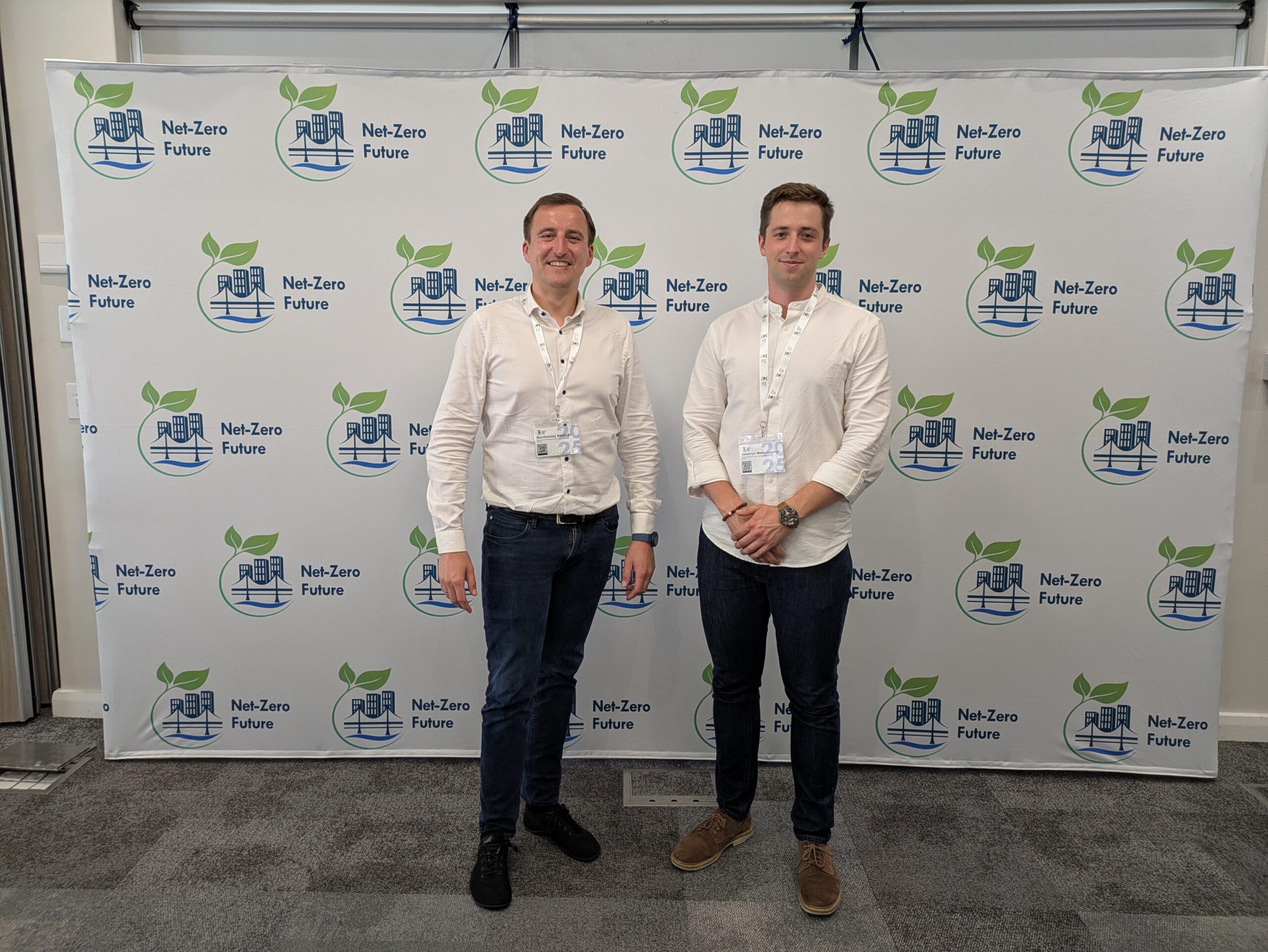
Within the framework of the Erasmus+ project IM4STEM – Intelligent Methods for Structures, Elements and Materials, Mr. Seweryn Malazdrewicz, MSc Eng, a PhD student at Wrocław University of Science and Technology, participated in the international scientific conference Net-Zero Future Conference 2025, held in Cape Town, South Africa, from November 5 to 7, 2025.
The participation was carried out as part of the project activities aimed at the international dissemination of research results, strengthening cooperation between academia and industry, and promoting sustainable and digitally supported solutions in civil engineering.
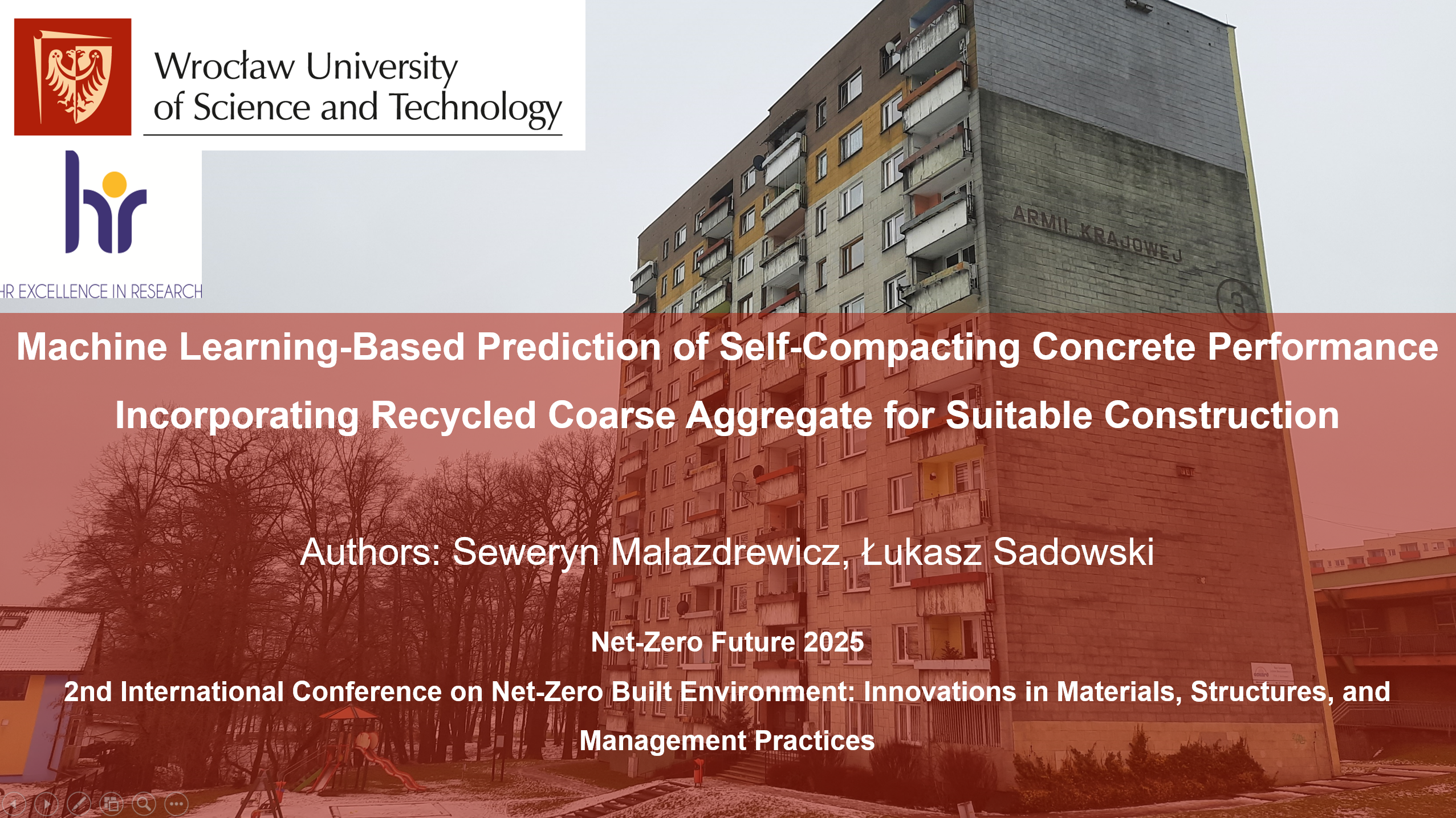
During the conference, an oral presentation entitled
“Machine Learning-Based Prediction of Self-Compacting Concrete Performance Incorporating Recycled Coarse Aggregate for Suitable Construction”
was delivered, co-authored by Seweryn Malazdrewicz and Prof. Łukasz Sadowski.
The presentation focused on the integration of machine learning techniques with experimental material research to support sustainable concrete design. In the study, concrete panels obtained from a demolished Large Panel System (LPS) building were processed into recycled coarse aggregate and incorporated into self-compacting concrete (SCC) mixtures.
Based on laboratory datasets, two predictive models — Multiple Linear Regression (MLR) and Random Forest Regression — were developed to estimate key fresh and hardened properties of SCC, including slump flow, initial setting time, and 28-day compressive strength.
The results demonstrated that ensemble learning methods, particularly Random Forest, are capable of capturing complex nonlinear relationships between mix design parameters and SCC performance, even when limited datasets are available. The study highlights the potential of AI-driven predictive tools to reduce the need for extensive laboratory testing, accelerate material optimisation, and support the broader objectives of net-zero construction, circular economy, and resource efficiency.
The presented work is strongly aligned with the objectives of the IM4STEM project, which promotes the use of modern, data-centric, and interdisciplinary approaches in STEM education and research.
The presentation was part of the official conference programme and attracted significant interest from both academic and industry participants. The conference provided an excellent platform for discussing the challenges of decarbonising the construction sector, comparing –*uropean and South African perspectives on sustainable material design, and establishing new international professional networks.