Venue: Faculty of Civil Engineering, University of Rijeka, lecture hall G-003
Date: 26 October 2026
Organisers: Faculty of Civil Engineering in Rijeka and the Rijeka Association of Inventors’ Associations, with the Croatian Innovators’ Community
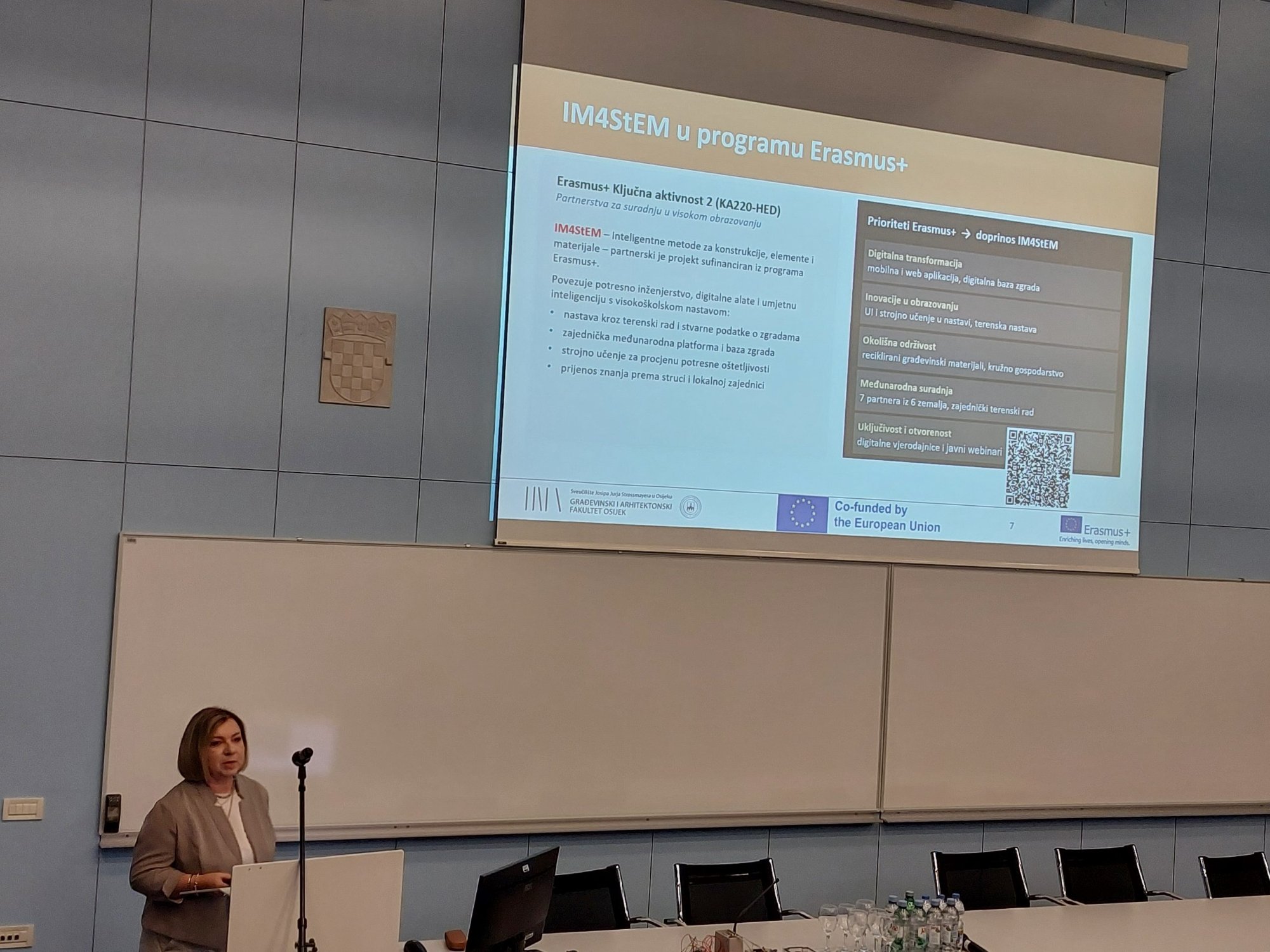
Lecture: “IM4StEM: development of an innovative method for assessing the seismic vulnerability of buildings”
Speaker: Prof. Marijana Hadzima-Nyarko, PhD
Source: https://gradri.uniri.hr/poslovna-suradnja/transfer-znanja/
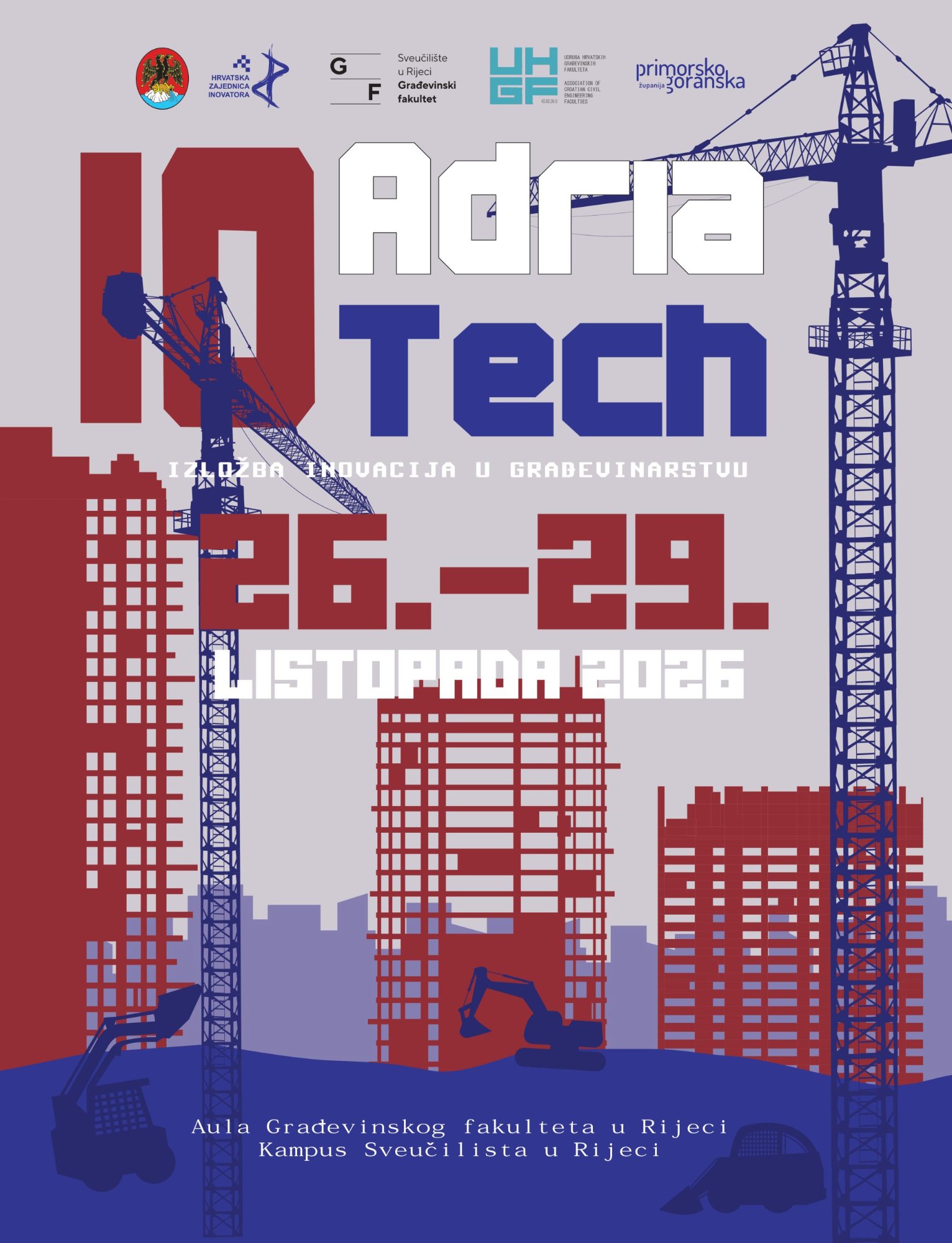
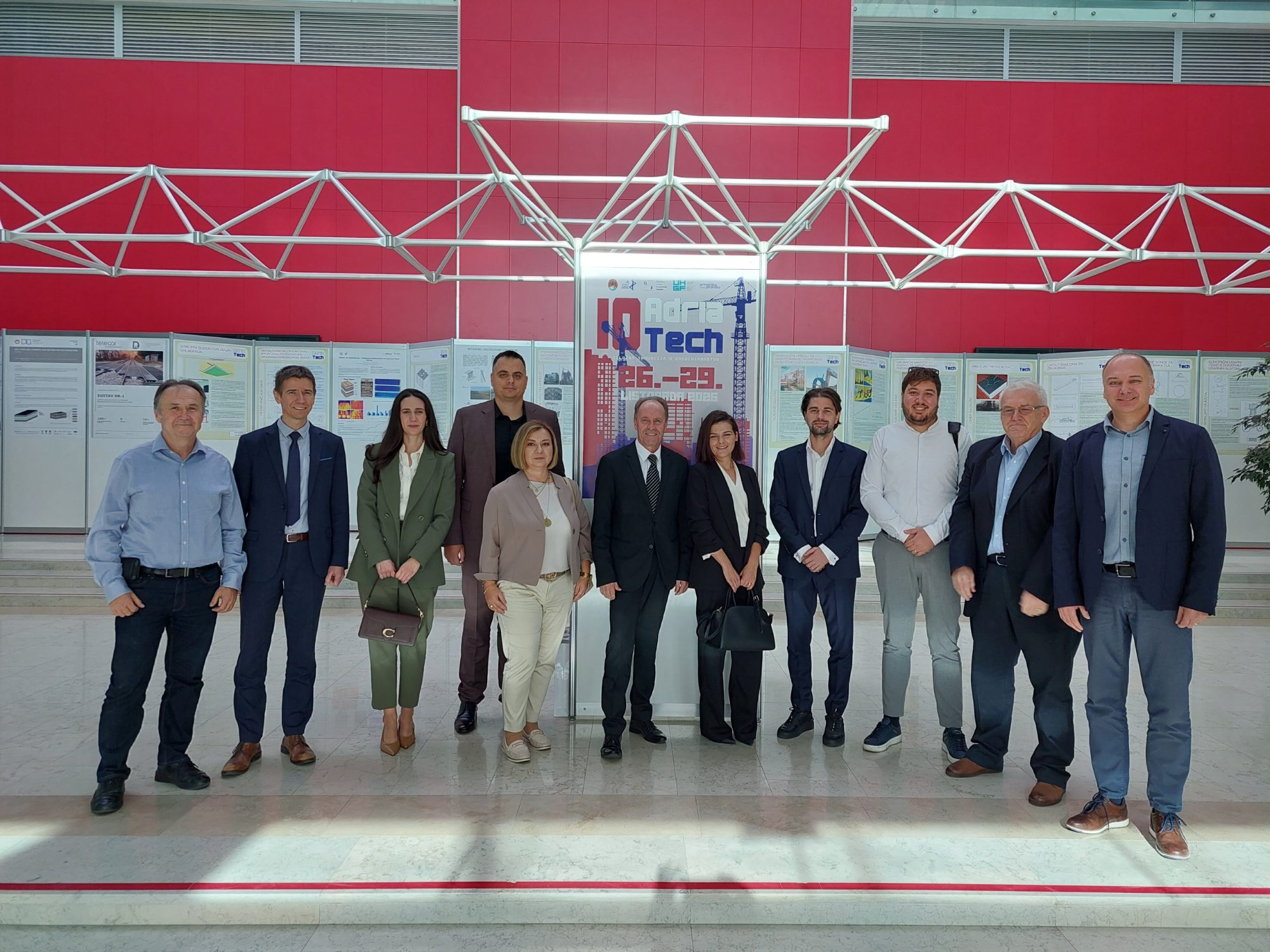
On 26 October 2026, the 5th Innovation Forum “Innovation in Civil Engineering – Strengthening Knowledge Transfer” was held at the Faculty of Civil Engineering, University of Rijeka, as part of the 10th jubilee ADRIATECH 2026, the Croatian Exhibition of Innovations in Civil Engineering. The forum was organised by the Faculty of Civil Engineering in Rijeka and the Rijeka Association of Inventors’ Associations, and brought together representatives of academia, researchers, innovators, professionals, and industry to exchange experience, present new technologies, and strengthen cooperation between science and construction practice. Participants were welcomed by Assoc. Prof. Mladen Bulić, Dean of the Faculty of Civil Engineering in Rijeka, Prof. Miljenko Šimpraga, President of the Croatian Innovators’ Community, and Prof. Goran Hauser, Rector of the University of Rijeka, while the programme was moderated by Assoc. Prof. Elvis Žic, Vice-Dean for Business Affairs.
Within the forum, IM4StEM project coordinator Prof. Marijana Hadzima-Nyarko, PhD, from the Faculty of Civil Engineering and Architecture Osijek, gave an invited lecture entitled “IM4StEM: development of an innovative method for assessing the seismic vulnerability of buildings”. She presented research on the application of machine learning to predict the extent of damage to buildings after earthquakes, conducted within the Erasmus+ project IM4StEM.
The research is based on data from 560 buildings, described by 22 structural, geometric, and seismological parameters, collected during field surveys following the earthquakes in Petrinja in 2020 and Kahramanmaraş in 2023. Regression and classification models, as well as artificial neural networks, were developed and compared on these data. The lecture highlighted the potential of artificial intelligence to support rapid assessment of seismic vulnerability and building safety, emergency intervention planning and decision-making on reconstruction.
Participation in the forum enabled the presentation of the results of the IM4StEM project to experts from academia and industry and demonstrated how research carried out within the project can be transferred into engineering practice. The forum and the exhibition underlined the importance of linking universities and industry and of applying scientific knowledge to the development of safer buildings, more efficient infrastructure maintenance and more responsible use of resources.