Venue: island of Vis, Croatia
Date: 16–19 September 2026
Organisers: Ivo Pilar Institute of Social Sciences and VERN’
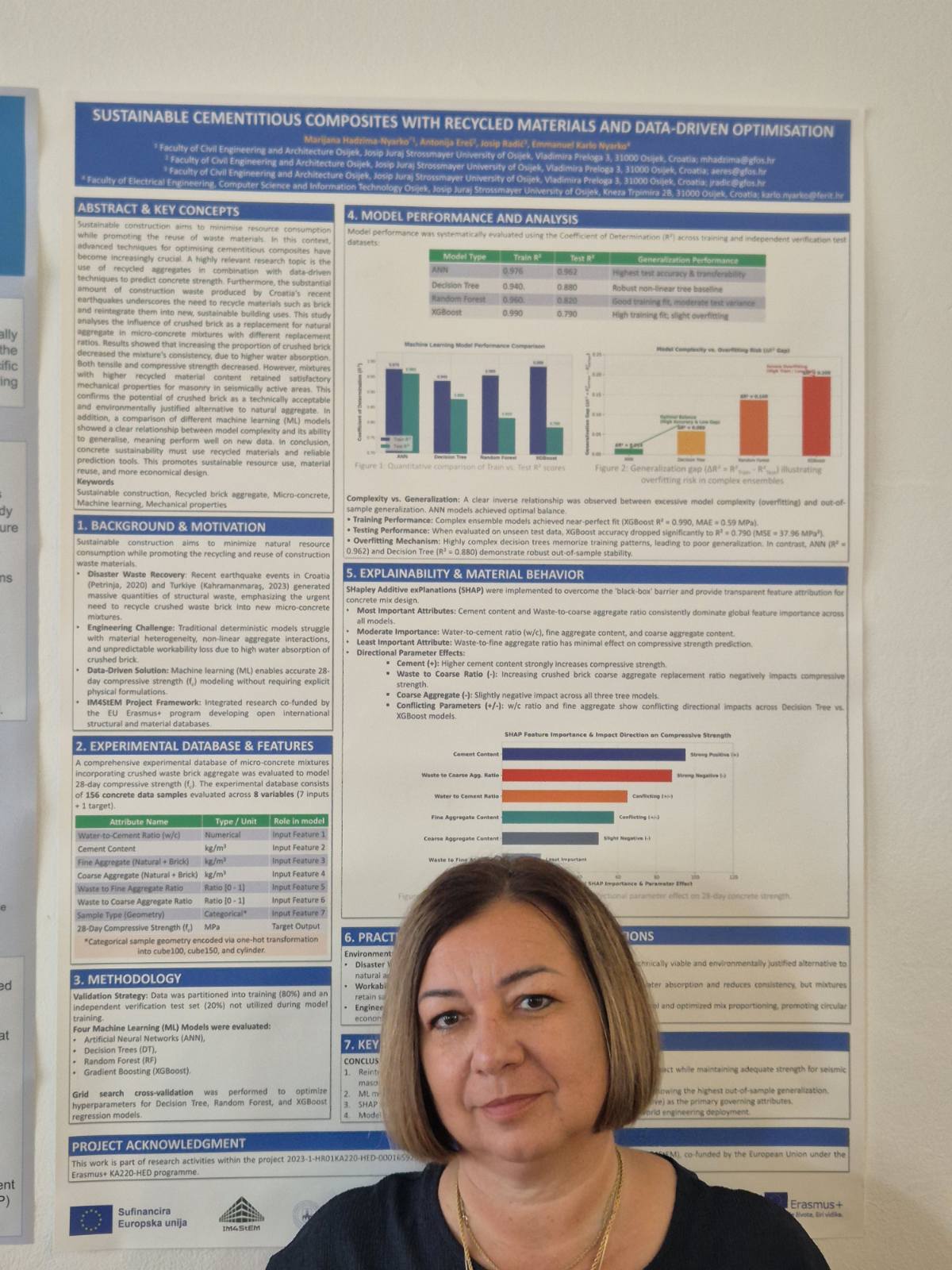
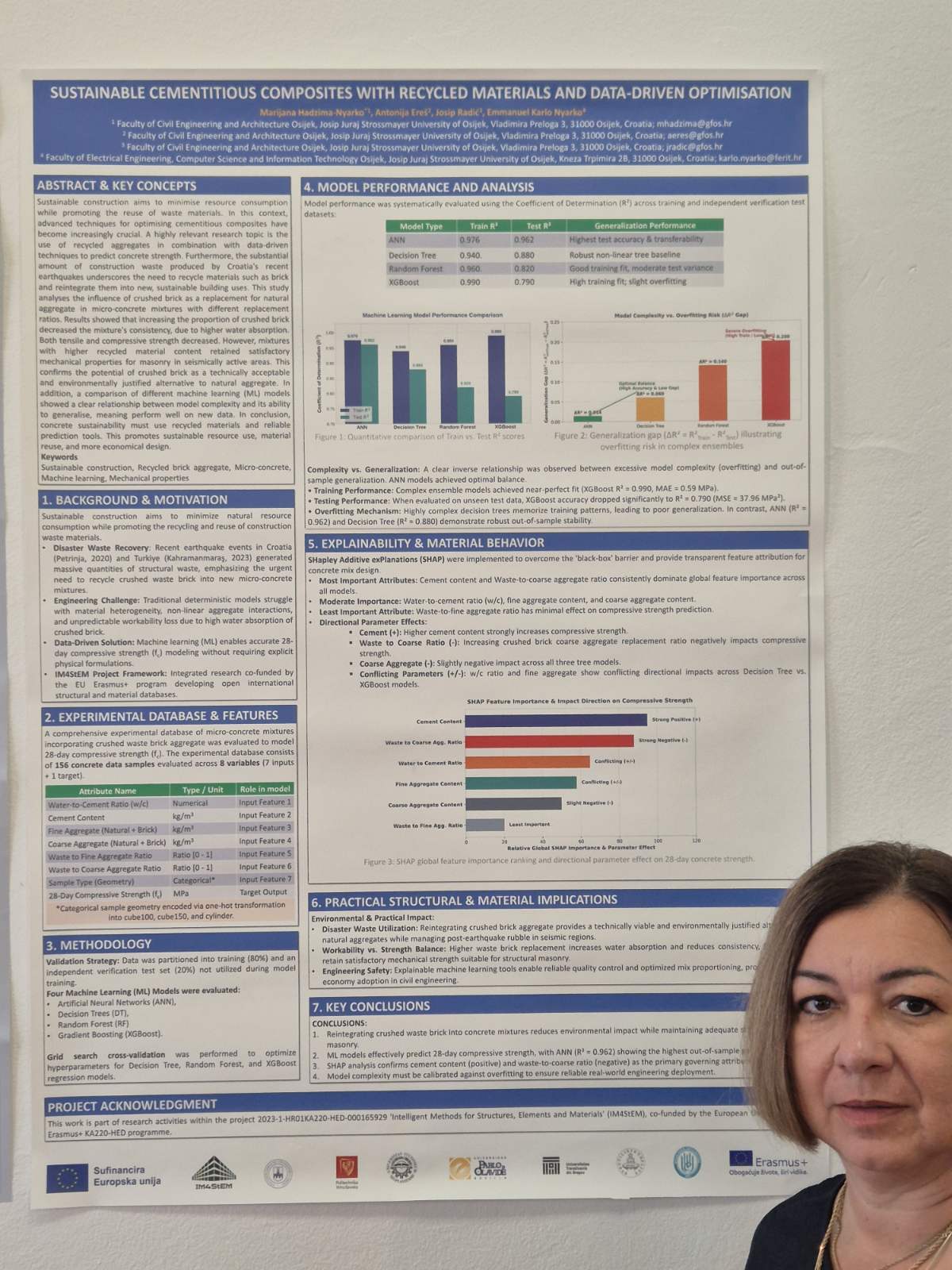
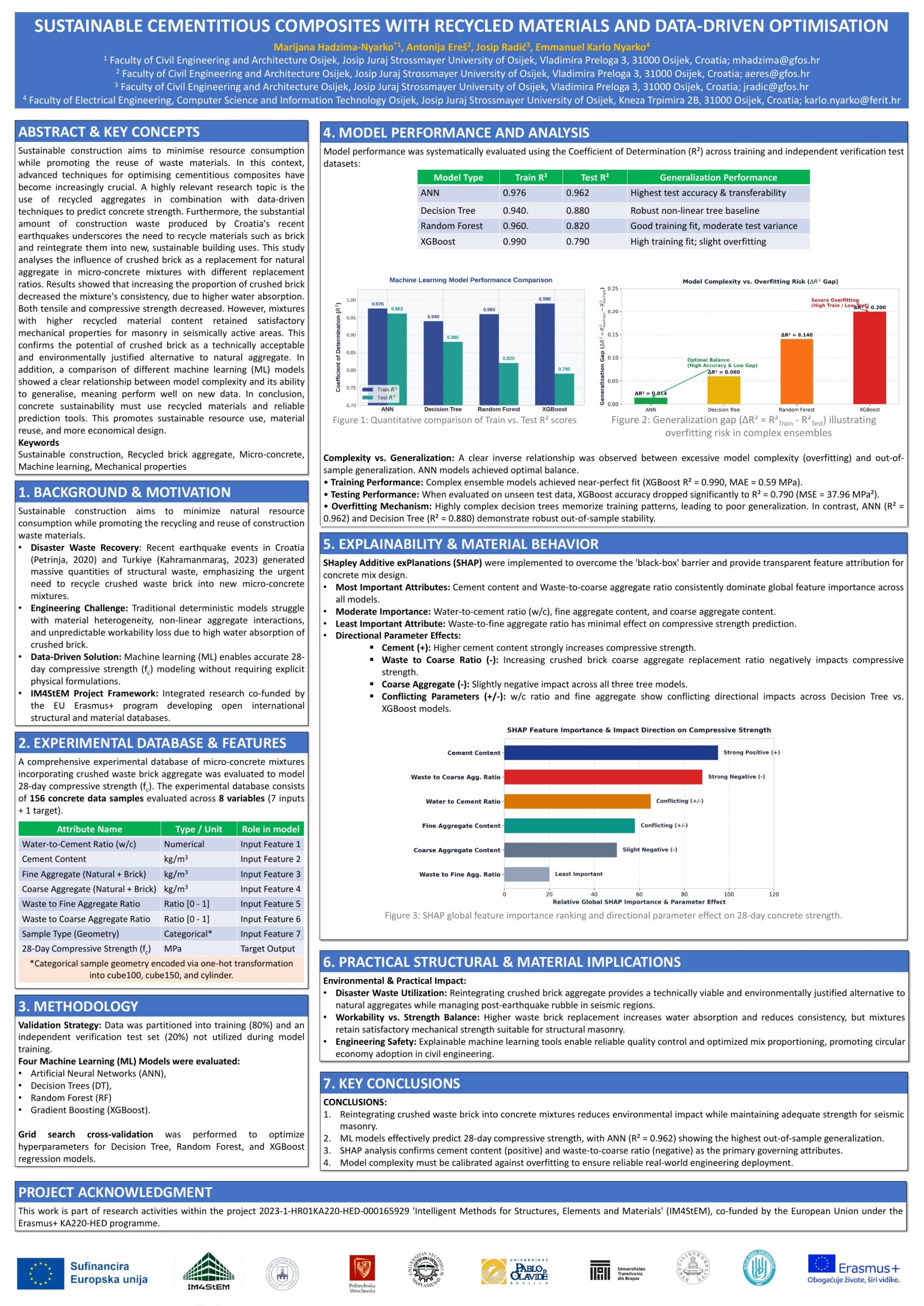
Poster: “Sustainable Cementitious Composites with Recycled Materials and Data-Driven Optimisation”
Authors: Marijana Hadzima-Nyarko, Antonija Ereš, Josip Radić, Emmanuel Karlo Nyarko
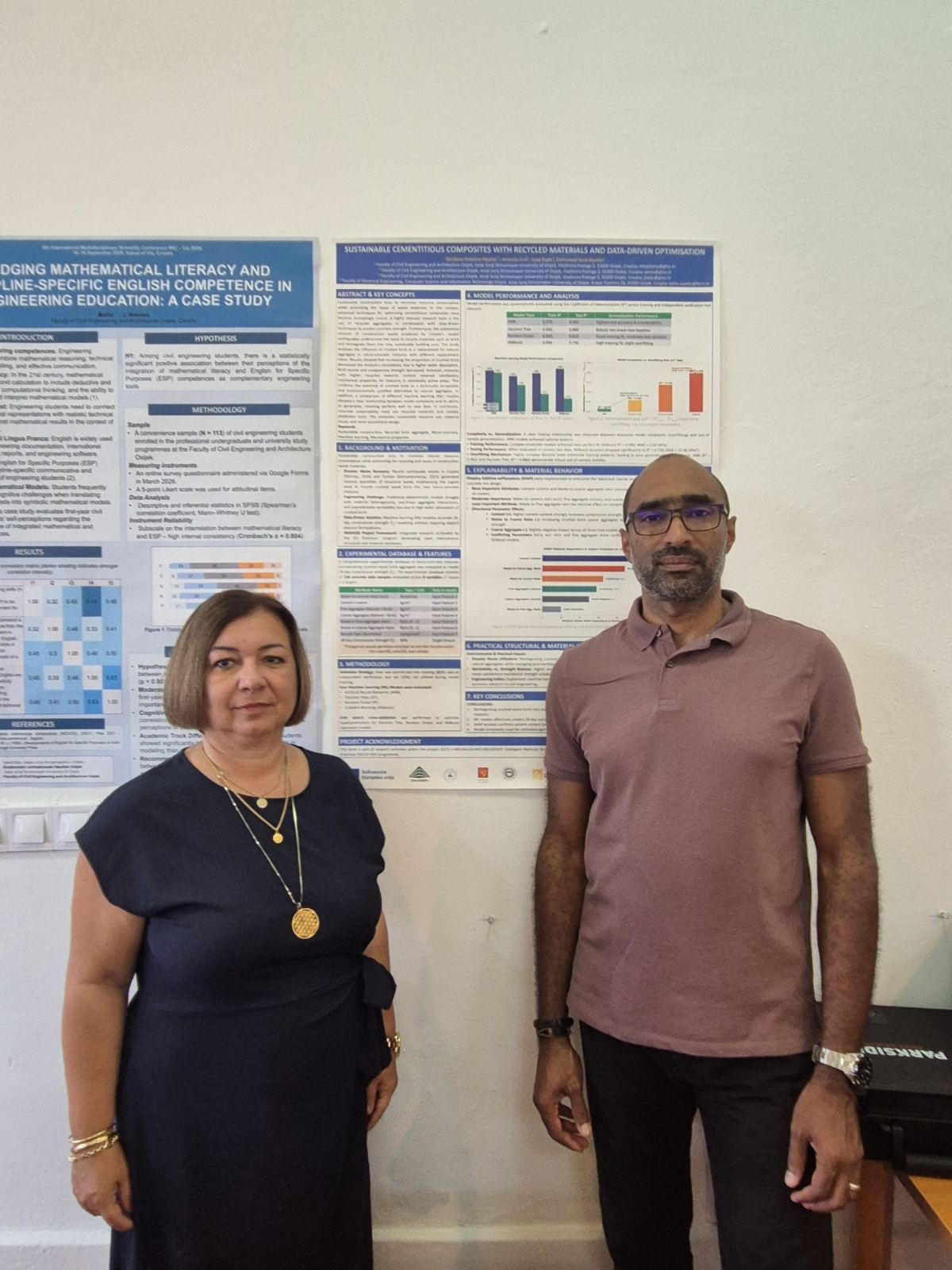
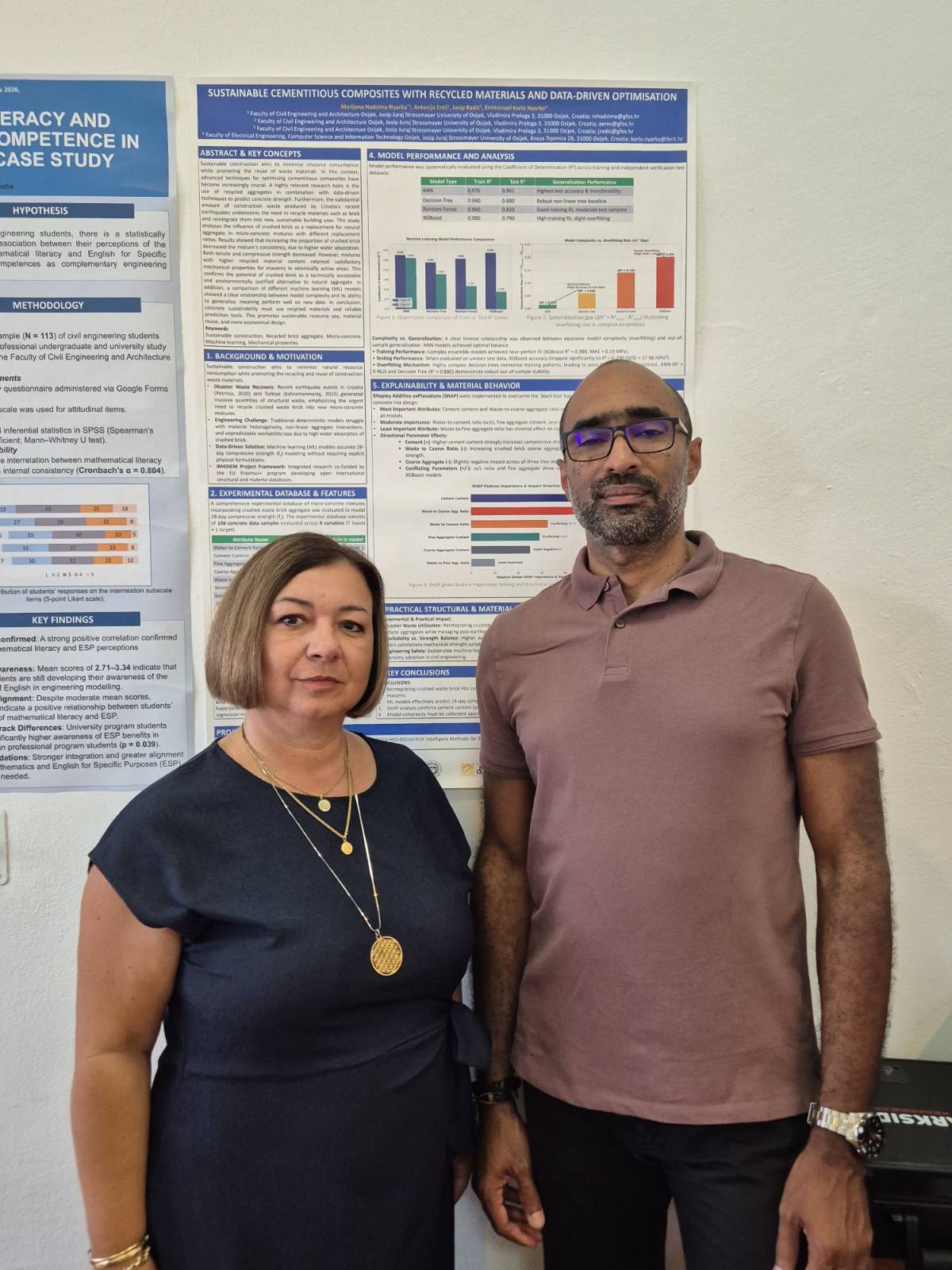
At the 6th International Multidisciplinary Scientific Conference MIC – Vis 2026 (Mediterranean Islands Conference), held from 16 to 19 September 2026 on the island of Vis, a poster entitled “Sustainable Cementitious Composites with Recycled Materials and Data-Driven Optimisation” was presented. The authors are Marijana Hadzima-Nyarko, Antonija Ereš and Josip Radić from the Faculty of Civil Engineering and Architecture Osijek, and Emmanuel Karlo Nyarko from the Faculty of Electrical Engineering, Computer Science and Information Technology Osijek; the research was carried out within the IM4StEM project, co-funded by the Erasmus+ programme. The conference is organised by the Ivo Pilar Institute of Social Sciences and VERN’ and is dedicated to the position, role and development of Mediterranean islands.
Sustainable construction aims to reduce the consumption of natural resources and to recycle and reuse construction waste. The earthquakes in Croatia (Petrinja, 2020) and Türkiye (Kahramanmaraş, 2023) generated large quantities of waste, underlining the need to recycle crushed brick and reuse it in new mixtures. Since traditional deterministic models struggle to capture material heterogeneity and nonlinear effects, the study applied machine learning methods to predict the 28-day compressive strength of concrete.
An experimental database of 156 micro-concrete samples with crushed brick aggregate was analysed, described by seven input variables – water-to-cement ratio, cement content, fine and coarse aggregate content, waste-to-fine and waste-to-coarse aggregate ratios and sample geometry – with compressive strength as the output. The data were split into a training set (80%) and an independent test set (20%), and four models were compared: artificial neural networks (ANN), decision tree (DT), random forest (RF) and XGBoost.
The results showed that increasing the crushed brick content reduces the mixture’s consistency due to higher water absorption, as well as tensile and compressive strength, but that mixtures with higher recycled content retain satisfactory mechanical properties for masonry in seismically active areas. The artificial neural network showed the best generalisation ability (R² = 0.962 on the test set), while XGBoost, despite an almost perfect fit on the training set (R² = 0.990), achieved R² = 0.790 on unseen data, indicating that more complex models overfit. SHAP analysis showed that compressive strength is governed mainly by cement content (positive effect) and the waste-to-coarse aggregate ratio (negative effect).
The study confirms that crushed brick is a technically acceptable and environmentally justified alternative to natural aggregate and that explainable machine learning models can serve as a reliable tool for quality control and mix optimisation, promoting circular economy principles in civil engineering. Participation in the multidisciplinary MIC – Vis 2026 conference enabled the presentation of the results of the IM4StEM project to a broader scientific community and facilitated knowledge exchange with researchers from various fields.