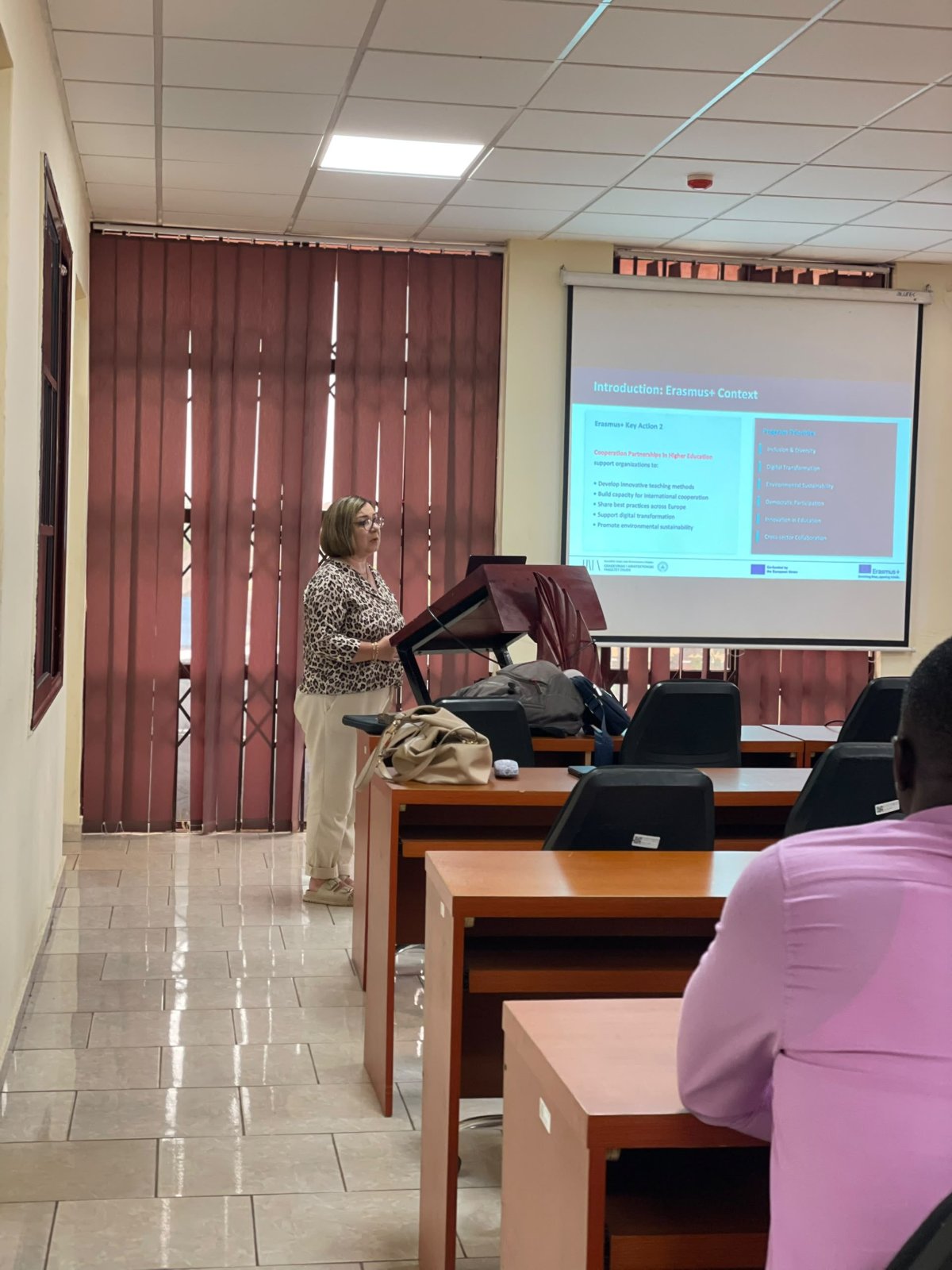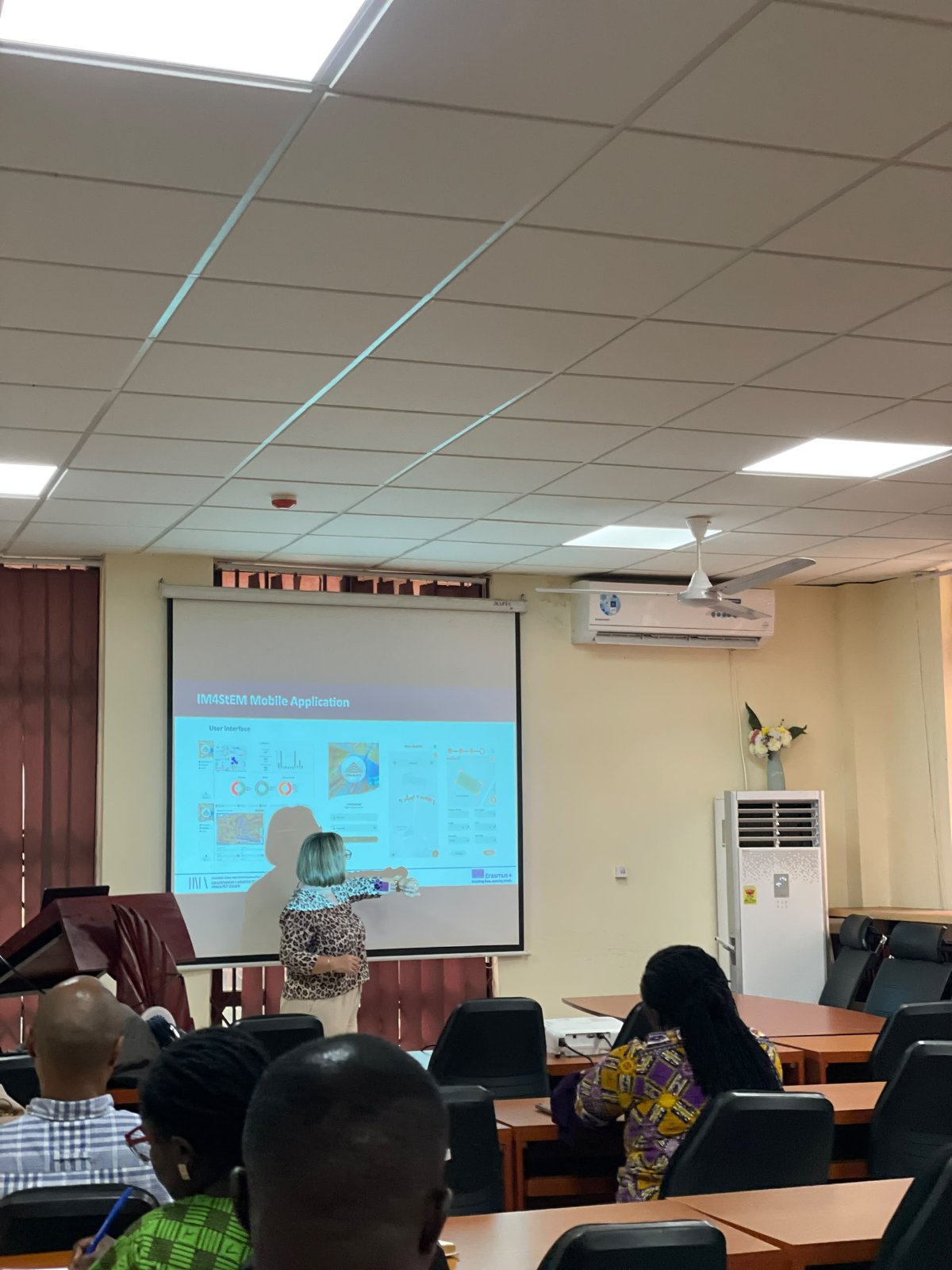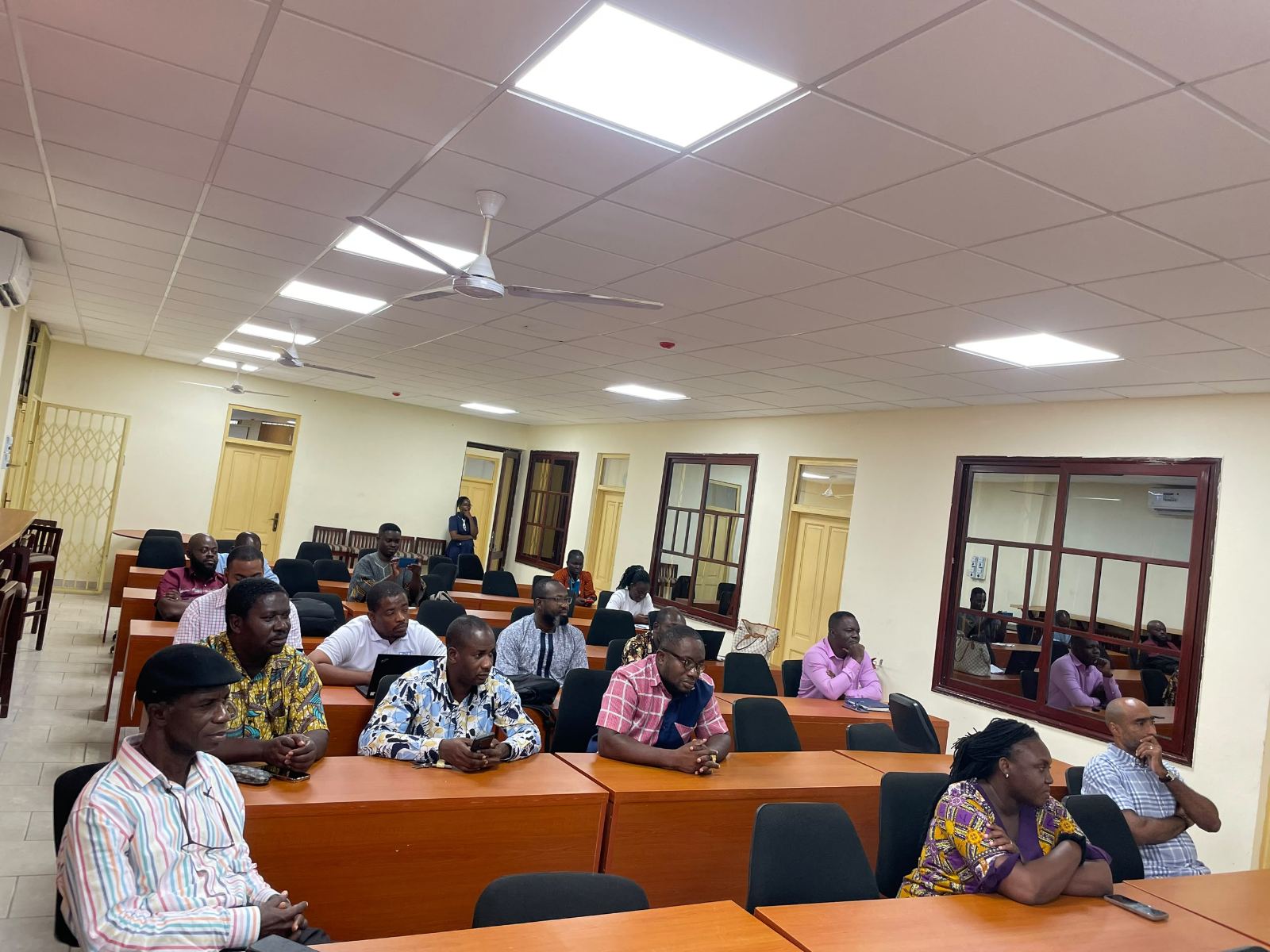
Venue: Takoradi Technical University, Takoradi, Ghana
Mobility period: 8–21 July 2026
Date of lecture: 15 July 2026
Programme: Erasmus+ KA171 – mobility project 2023-1-HR01-KA171-HED-000122182
As part of the Erasmus+ international mobility project 2023-1-HR01-KA171-HED-000122182, IM4StEM project coordinator Prof. Marijana Hadzima-Nyarko, PhD, stayed at Takoradi Technical University in Takoradi, Ghana, from 8 to 21 July 2026. During her visit, on 15 July 2026, she gave a lecture in which she presented to the university’s academic community the Erasmus+ KA220 Cooperation Partnership in Higher Education project Intelligent Methods for Structures, Elements and Materials – IM4StEM, together with its key results.
The lecture opened with an overview of the Erasmus+ programme and the main facts about the IM4StEM project, which has been running since September 2023 with a duration of 36 months and a total budget of EUR 400,000. The project brings together seven partner institutions from six countries – the Josip Juraj Strossmayer University of Osijek (Faculty of Civil Engineering and Architecture Osijek and Faculty of Electrical Engineering, Computer Science and Information Technology Osijek) as coordinator, the University of Split, Universidad Pablo de Olavide in Seville, the University of Novi Sad, Bitlis Eren University, Wrocław University of Science and Technology (Politechnika Wrocławska) and Transilvania University of Brașov – supported by numerous associated partners from the academic, professional and public sectors.
Particular emphasis was placed on the project’s concrete results. The IM4StEM mobile and web application, developed for direct collection, storage and synchronisation of building data during field surveys, was presented, along with the data collection activities carried out in the partner cities of Osijek, Split, Brașov, Bitlis and Novi Sad. The lecture also covered field surveys of earthquake-damaged buildings in Petrinja and in Türkiye (Kahramanmaraş and Hatay Province), the application of artificial intelligence and machine learning methods to predict the compressive strength of concrete, the strength of masonry walls and earthquake damage levels of buildings, as well as laboratory testing of concrete with recycled brick aggregate and research focused on the circular economy in construction.
The visit to Takoradi Technical University made it possible to present the results of the IM4StEM project beyond the European context, to exchange knowledge and experience with colleagues from Ghana, and to open the way for possible future cooperation in the fields of earthquake engineering, digitalisation and sustainable construction. In this way, the international visibility of the project was further strengthened and the applicability of its results in different educational and research settings was confirmed.