Thesis title: “Comparative analysis and evaluation of the fundamental vibration period of masonry structures”
Student: Filip Nikola Sabo
Supervisor: Prof. Marijana Hadzima-Nyarko, PhD
Co-supervisor: Assoc. Prof. Silva Lozančić, PhD
Study programme: University graduate study programme in Civil Engineering, Faculty of Civil Engineering and Architecture Osijek
Date of defence: 25 September 2026
Permanent link: https://urn.nsk.hr/urn:nbn:hr:133:080079
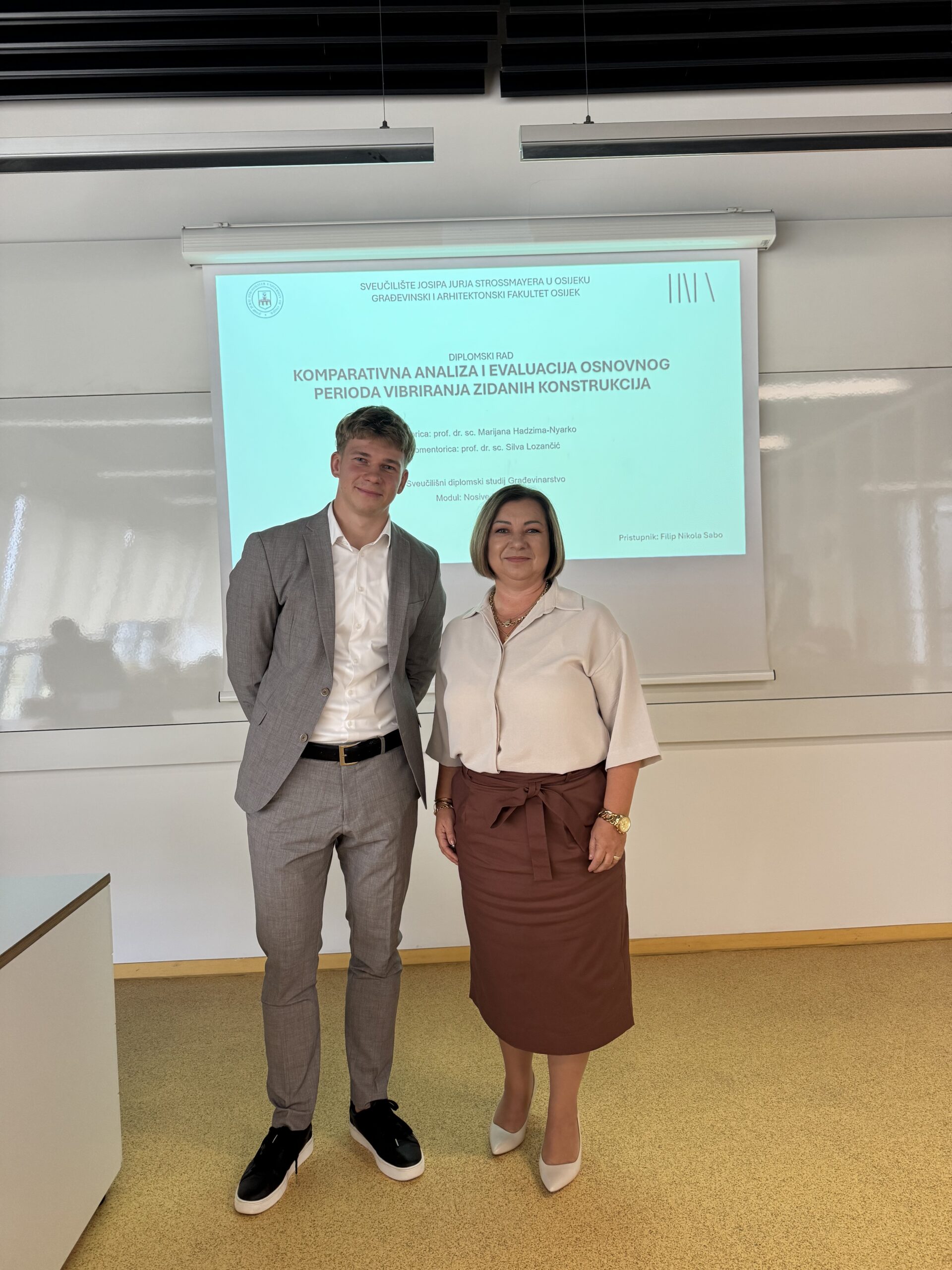
Within the Erasmus+ project IM4StEM – Intelligent Methods for Structures, Elements and Materials, the master’s thesis of student Filip Nikola Sabo, entitled “Comparative analysis and evaluation of the fundamental vibration period of masonry structures”, was successfully defended at the Faculty of Civil Engineering and Architecture Osijek on 25 September 2026. The thesis was supervised by Prof. Marijana Hadzima-Nyarko, PhD, and co-supervised by Assoc. Prof. Silva Lozančić, PhD.
The fundamental vibration period is a key parameter for assessing the dynamic response and seismic behaviour of buildings. Masonry buildings make up a large part of the existing building stock, yet the empirical code expressions most commonly used in practice to estimate their fundamental period are based primarily on building height and do not adequately account for the structure’s actual properties.
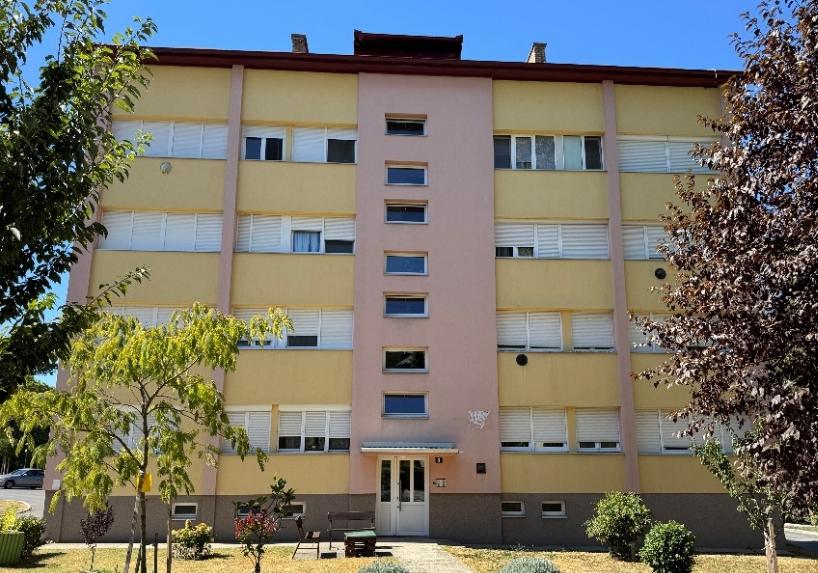
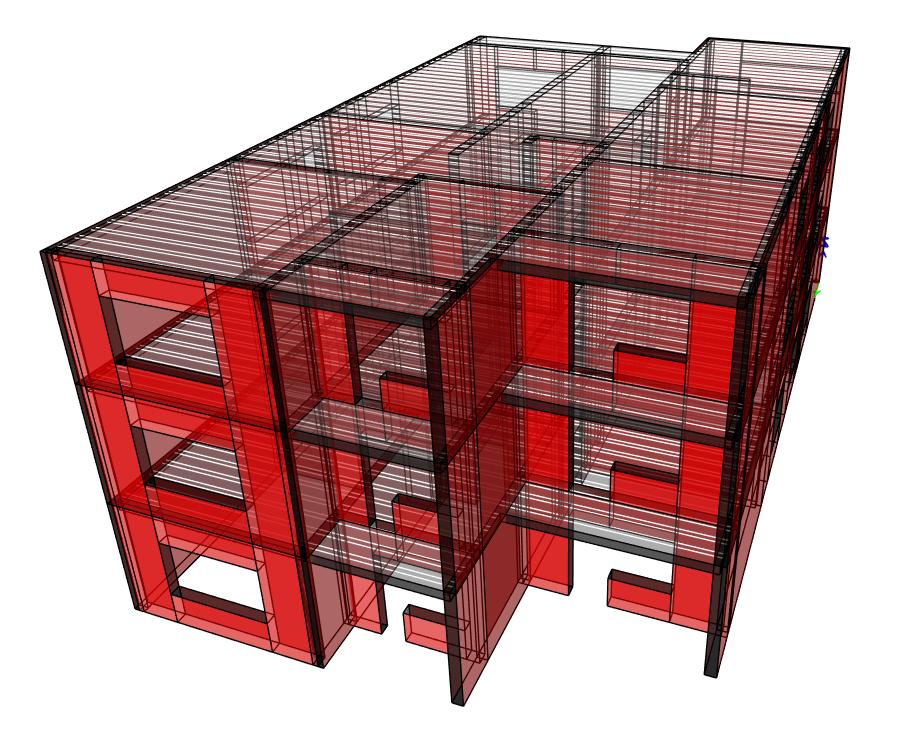
The thesis examines the reliability of empirical expressions for estimating the fundamental vibration period of masonry buildings. A database covering unreinforced and confined masonry buildings was compiled from international literature. The author’s own research included twelve buildings in Slavonia, on which ambient vibration testing (AVT) was carried out, fundamental periods were calculated using code expressions, and three-dimensional numerical models were developed in ETABS. Periods calculated according to HRN EN 1998-1:2011, HRN EN 1998-1:2011/NA and NBCC-95 were compared with the results of measurements and numerical analyses.
The results showed that no single expression is the most reliable across all buildings, and that a more complex expression does not necessarily yield a more accurate estimate. The analysis of modal mass participation ratios showed that the dominant translational response may occur in a higher mode of vibration and that coupling between translation and torsion is present in some buildings. Period estimation therefore depends on the structural typology and actual properties of each building, which is why empirical results should be considered together with ambient vibration measurements and three-dimensional numerical models.
The thesis was prepared within the IM4StEM project “Synergy of the application of intelligent methods in assessing the behaviour of buildings, elements and materials and innovative use of recycled building materials based on experimental and novel approaches for establishing a sustainable living space” (2023-1-HR01-KA220-HED-000165929), implemented under the Erasmus+ programme, with a particular focus on assessing the dynamic properties and seismic behaviour of buildings. In line with the project’s objectives, the thesis contributes to a more reliable assessment of the dynamic response of masonry structures and to their safer seismic evaluation.